Valuation guide
Predator Accelerator Value
What original Accelerators sell for, and what drives the price.
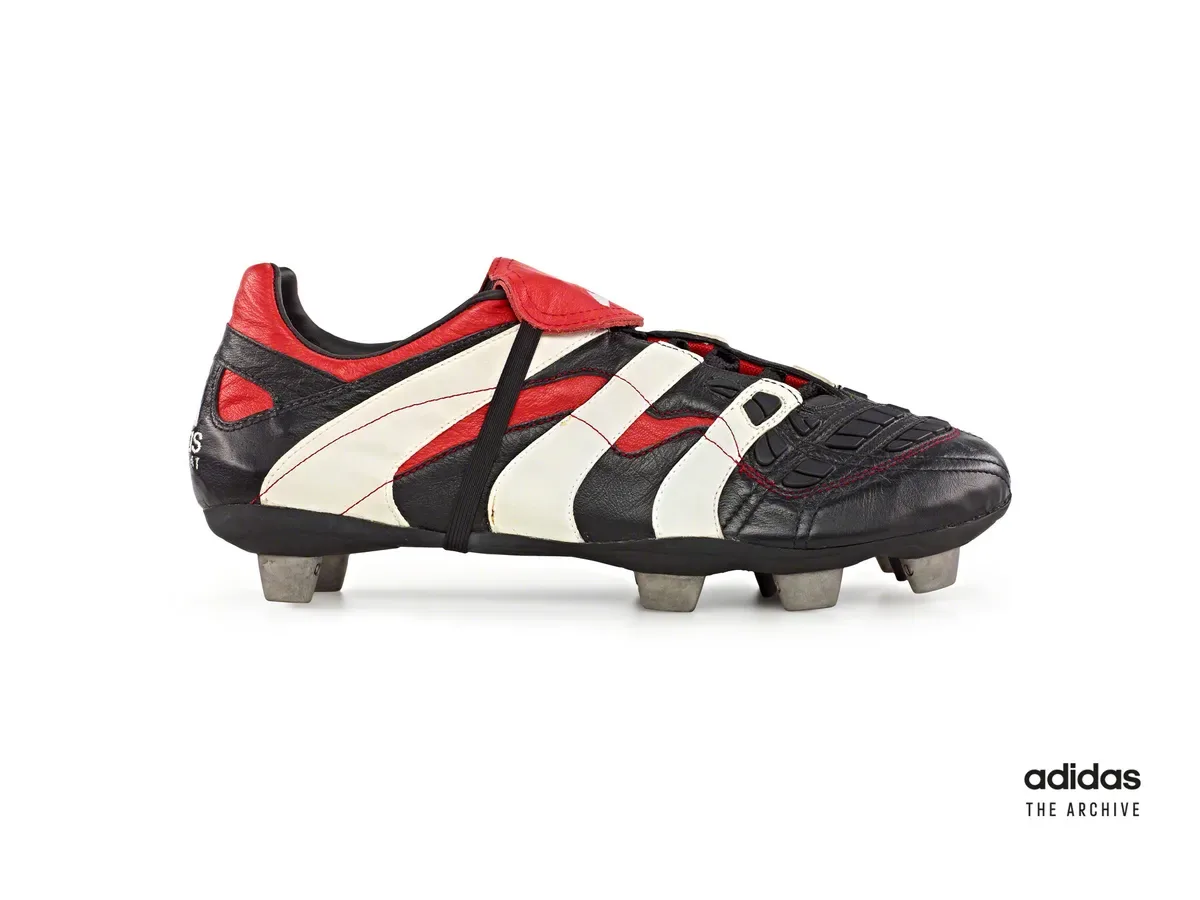
Ask collectors which vintage Predator they’d want in their size, and the Accelerator comes up as often as any boot adidas has made. It was the Predator of the 1998 World Cup, Zinedine Zidane wore it to France’s first world title, and its black, white and red profile became the template every later Predator was measured against. That history is exactly why an original, unworn pair is one of the more valuable things a Predator collector can own.
This page sets out what actually moves the price, and what we could verify about current values — which, for a 27-year-old boot, is less than you might hope.
What drives the price
The same handful of factors decide what any original Accelerator is worth, roughly in order of importance:
- Condition. This is the big one. Boots from 1998 are old enough that the glue, foams and soleplate can degrade even on a pair that was never worn — collectors call it “deadstock” when a pair is unworn and still close to factory-fresh, and it’s rare. A played pair with cracking or perished rubber is worth a fraction of a clean one.
- Whether it’s an original or a reissue. adidas has brought the Accelerator back more than once (see below). A genuine 1998 pair is a different thing entirely from a 2018 or 2023 reissue, even in the same colourway — see our guide to telling remakes from originals.
- Size. Smaller and larger sizes are rarer in deadstock condition, simply because fewer were made and kept.
- Packaging and extras. The original box, that era’s laces and any accompanying paperwork add to the value of an unworn pair; a boot on its own, with no box, is worth less to a collector even in the same physical condition.
- Provenance. A boot with a documented story — proof it was a player’s own pair, or tied to a specific match — sits in an entirely different bracket to a retail pair bought off a shelf. That’s a specialist, high-end market of its own, distinct from the collector values this page covers.
The reissues, and why they matter to value
adidas has returned to the Accelerator several times, and each reissue changes what collectors will pay for an original:
- 2014 — the Revenge Pack. A 20th-anniversary tribute built on a synthetic upper and a then-current soleplate — not a copy, and easy to tell apart from an original on sight.
- 2017 — the Beckham capsule and the Zidane gold edition (2019). Celebratory designs built on the Accelerator’s shape rather than reproductions of the 1998 boot.
- A black/white/red limited reissue, and a later Pro:Direct collaboration in a chrome colourway, have also brought the Accelerator back in small numbers at a premium price, closer in spirit to the original upper than the 2014 tribute.
None of these are the 1998 original. Every reissue makes an authentic 1998 pair slightly more identifiable — and, if anything, more desirable — because the differences are now well documented. Our spot-fake-predators guide covers the checks that separate a 1998 pair from everything that came after.
What they actually go for
Here’s where we have to be straight with you: we could not find a reliable record of completed sales for original 1998 Accelerators — the kind of data you’d get from eBay’s own “sold items” filter. What we found instead was a wide spread of asking prices on resale sites, which is not the same thing.
Asking prices we’ve seen for original pairs range from under £100 for well-worn examples up to several hundred pounds for clean pairs in sought-after sizes, with exceptional deadstock examples listed well beyond that. That spread tells you condition and rarity matter enormously here — but a listing price is what a seller hopes for, not what a boot is actually worth.
If you’re buying or selling, the only number that matters is a genuine completed sale in a comparable size and condition, as close to today as possible. Check a marketplace’s own sold/completed listings rather than relying on any figure — including this page’s — as a valuation.
Frequently Asked Questions
What is an original Predator Accelerator worth?
It depends heavily on condition, size and whether it’s genuinely the 1998 original rather than a later reissue. There’s no reliable public record of recent completed sales, so treat any asking price you see, including the ranges on this page, as a starting point rather than a valuation — check a marketplace’s own sold listings for a current figure.
What makes the Predator Accelerator valuable to collectors?
It was the Predator of the 1998 World Cup, worn by Zinedine Zidane, and it set the look every later Predator was judged against. Original, unworn pairs are now scarce enough that condition and rarity drive the price far more than the original retail cost ever did.
Is a reissued Predator Accelerator worth as much as an original?
No. Reissues are worth collecting in their own right, but they sell for less than a genuine 1998 pair in the same condition, because they aren’t the boot that was actually on the pitch in 1998.
How can I tell if my Accelerator is an original or a remake?
Check the upper material, the soleplate and the label — our guides to remakes vs originals and spotting fake Predators cover the specific checks.
Read more: Predator Accelerator · Predator remakes vs originals · How to spot fake Predator boots · Vintage Predator values